
Not much British steel in this budget, sadly
I keep a close watch on this heart of mine
I keep my eyes wide open all the time
I keep the ends out for the tie that binds
Because you're mine, I walk the line
Johnny Cash, Walk the Line (1957)
If anyone was expecting fireworks from the Autumn budget, published and delivered on the 28th of October, they’ll have had to wait another week for Bonfire Night. It saw a near-new Chancellor walk an extremely thin line in balancing limited financial headroom with an overwhelming desire to not spook the markets.
The outcome was tepid. My previous Surbiton neighbour Andy Haldane scored it just four out of ten, ultimately summarising it in two fairly withering paragraphs:
It was a Budget with a tincey bit more spending, a tincey bit more tax and nothing really that would give us any greater confidence that those debts and deficit could be brought down – if anything those deficits and debts were revised upwards. We remain in a position of quite acute fiscal precarity.
It was a do-no-harm Budget and as best we could tell, people shrugged: businesses, consumers, financial markets. And given its predecessors, maybe we should thank heavens for those small mercies.
It was also hard for me to disagree with those sages over at the Institute for Fiscal Studies, who opined that:
The Chancellor managed to avoid any immediate political or market fallout from his first Budget on Wednesday, which included the largest number of individual announcements in history but the smallest overall change to the overall fiscal picture in several years.
I’ve got some sympathy with John Healey; his overall approach was quite understandable given that he, and the Prime Minister, have not been in place long and they’ve arrived at a time of comparative global turmoil. They’ll have to do a lot better in future however across their entire policy programme - and yes folks, that includes how it either works with or gets out of the way of private industry - to deliver its “good growth” economic mission, otherwise it’ll swiftly founder.
This assessment of the Autumn budget is not exhaustive; it is strictly through the lens of economic development. The budget can be read in full here; those wanting a detailed economic breakdown, including an interrogation of the figures that underpinned the budget, should head over to the IFS website; and those wanting to see how it’ll affect their own personal finances should look over fellow Manchester City fan Martin Lewis’ work here.
We like some of it - but there’s a definite feel of ‘we’ll work out the detail later’
Let’s start with what we liked.
Funding for ongoing devolution (and regionally significant projects)
Absolutely no surprises in our first pick, given our founders’ view on it and what we offer as a business! Increased regional devolution (and funding) will be one of the lasting legacies of a Burnham government. It is long overdue, given the morass of recent years that’s seen the stymying of a large number of regionally necessary projects, contributing to their comparative economic underperformance (see one recent East Midlands example here). These projects have often fallen between two stools: they are too small for central government to care or intervene (often failing as the Green Book previously did not properly account for wider definitions of ‘value’), whilst being too big for a local authority/partnership to fund or deliver on their own.
What sort of projects are we most vexed about?
New railway stations;
Public transport development, including new bus/tram routes;
New access/link roads to open up new developments; and
The re-opening or re-imagining of former community assets, including former factories and colliery buildings….
….as well as the age-old game of overcoming the viability hurdles of developments at the heart of places, in particular those in city and town centres.
In parallel with the budget, the Government announced 10 new devolution agreements to create further combined authorities including in Hertfordshire; this will mean that over 90% of England’s population will have a devolution agreement in place by the end of 2028, with the entirety of the North of England covered by mayoral devolution for the first time. This push was twinned with some of the most eye-catching parts of the budget, specifically including:
Business Rates Retention: Mayors will receive a 20% share of locally retained business rates starting in April 2027, with the broader target for local and regional government to retain 100% of business rates income by the end of the decade, replacing traditional revenue support grants. Put simply - regional government is being incentivised to deliver growth.
Borrowing Facilities: Mayoral strategic authorities will gain access to a new £1.5 billion bespoke borrowing facility to support local infrastructure and concessional lending.
Good growth funds: the Chancellor also confirmed an allocation of £285 million in 2027-28, including £120 million of incubator capital funding, for areas transitioning towards a devolution deal or Strategic Authority status.
An enhanced role for state-backed sources of capital: The National Wealth Fund (NWF) and British Business Bank will receive an additional £20.4 billion, described as “strengthening the government’s two main public finance institutions and their role in supporting reindustrialisation, regional growth and Britain’s strategic industries.”
This begins to give combined authorities the financial latitude they need to prevent them going cap in hand to Government for their schemes; in theory, this could save months of assurance work and makes their delivery a far more genuine prospect. Don’t expect it to be a quick process though; combined authorities, nascent in their own right, have to further upgrade their capabilities to take on their development and delivery, representing the single largest risk to the devolution programme.
They will have to come up with swift and robust responses on:
Appraising schemes using their own methodologies - keeping the Treasury happy (as the ultimate arbiter of initial funds) whilst accounting for both local differences and assets;
How they plan to ‘broker’ themselves into wider funds, including the NWF and pension funds with a mandate to invest in the regions (see previous Bellona reports);
How they will grow their capacity to deliver projects, not just act as commissioner; and
Their subsequent stitching together of these schemes into genuine long-range planning through Spatial Development Strategies (“SDS”).
In fairness to the Government, their fiscal devolution roadmap - published in parallel with the budget - recognises some of these emerging issues and has provided some capacity funding to regional bodies. It’s relatively thin though, and it has to cover an awful lot of topics in a very short amount of time. Their malaise is further compounded by other expected Government guidance, including a confirmed SDS geography, still not being available.
It’s clear that a lot of this is being done on the fly. As for thousands of other economic development professionals we’ll help authorities and the Government where we can, but the road to growth through devolution will not be immediate….
Efforts to boost housing demand
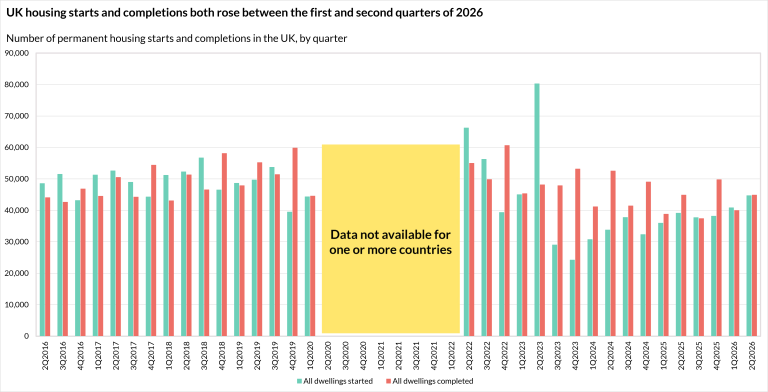
Make no mistake, housebuilders are struggling across the UK. Witness significant redundancies at the UK’s biggest housebuilders including Taylor Wimpey and Vistry, the decision by the former to no longer build in London (!!), the decline in the SME housebuilder base and a growing spate of contractor administrations. Principally caused by an increasing viability hurdle (or to put it another way, it really doesn’t pay to be a housebuilder once you account for all the ‘debits’ a scheme needs to factor in) and flaccid buyer demand, England will do well to see 200,000 new homes built in 2026 - a full 100,000 short of the Government’s long promoted target.
The budget had to deliver something to address this debacle beyond ‘planning reform’ (see previous Bellona reports). Following significant lobbying by industry groups including the HBF, more details were given on the 'Your First Home' scheme – a new mortgage scheme aimed at helping to get first-time buyers onto the property ladder first announced in September.
The scheme, which bears some similarity to the Help to Buy equity loan scheme which ran between 2013 and 2022, provides first-time buyers with an equity loan of up to 20% of the property price. Applications open in February 2027 and there are a number of restrictions around who will qualify for the scheme; for example, it's only available to those who are happy to live in a new build home and those who have a deposit of at least 2.5% of the property price.
It’s certainly better than nothing, but as Property Week points out here it was not exactly welcomed with open arms…..
The budget also confirmed previously trailed plans (back in June) for a First Time Buyer ISA (FTB ISAs). In straightforward terms it looks a bit like a Help to Buy ISA 2.0: you save for a first home, the state adds a bonus when you're ready to buy a home, and the money can be used at exchange. MSE has further details on the programme here.
Again, this is better than nothing. The kick though is its timing; 2029 at the earliest, with the obvious concern that it will be further watered down prior to its implementation. This does not smack of a Government taking immediate action.
A new Data Centre ‘covenant’
We’ve argued before that in an age of a continued reliance on e-commerce and the inherent growth of AI tools across all forms of work and life, there is an abundant need for hyperscale data centres, close to population centres, to support it. At the same time of its need however, public support is significant dwindling - following a clear pattern in other countries, including the US. What can be done?
Enter a new ‘British data centre covenant’, billed as forcing data centre developers to “invest in their local area and ensure local water supplies are protected”; in return, they are promised faster grid connections and the ability to generate their own electricity. This is eminently sensible:
Microsoft has recently pulled out of investing in the UK’s largest data centre, as reported here, principally due to grid connection concerns (read: delays). Anything to give investor confidence must be supported.
Worries about water supplies, and how water use can be minimised (for example through closed-loop systems) are well founded; anything that forces the hand of developers to better explain water management to key stakeholders (and the wider public) should also be supported.
Finally, it makes absolute sense for the Government to support renewables/microgrids as part of Data Centre development, reducing carbon emissions and (subject to the installation of Battery Energy Storage Systems) providing back-up should the worst come to the worst.
My good friend Simon Ricketts has written an in-depth blog on the subject; as ever, it’s recommended reading.
A few more cans have been kicked
Now onto the debit side. Back to that man Andy Haldane:
Had the Chancellor… stood up and surprised the markets – and probably me as well – and done a first instalment to get public spending under control, I think he would have been rewarded handsomely by the market in lower borrowing costs; not just governments, by the way, but also for mortgages and indeed for businesses.
Whilst the Chancellor committed to fiscal consolidation, any plans to reduce borrowing were put back - emphasising the financial and political tightrope that the Chancellor has to walk.
Why is this the case? The OBR expects that higher borrowing costs have reduced 'headroom' against the binding fiscal rule to £13 billion. Increases in taxes are forecast to be slightly higher than spending increases in 2029–30, leaving headroom at £15 billion. As the IFS sagely asserts:
It was a reasonable choice to allow the headroom to absorb the impact of higher borrowing costs but it is not costless. Borrowing will be higher and the Chancellor now has less scope to absorb future bad news.
It also means that there is little room to fund the Government’s other priorities. Let’s look at defence for example: the Budget is claimed to strengthen Britain’s national security by ‘fully funding the £15 billion Defence Investment Plan, including £4.7 billion that was previously unfunded……delivered by reprioritising capital budgets across government.’ Aside from £2bn taken from DESNZ for carbon capture/related projects, we’re struggling to see where the other financing is coming from.
This makes us a tad cynical about how much of this future funding will be delivered…but also makes us worry about how any new commitments would be funded. If this year’s budget was tight, what will 2027 be like? The 2027 budget is, of course, the one that is supposed to set out the detailed route to achieve NATO’s 3.5% of government spending on Defence commitment by 2035…..
Some other notes
It wouldn’t be a Bellona report if I didn’t highlight a few items that annoyed me and struck me as either performative or misguided. In short order….
A moratorium on Biodiversity Net Gain for brownfield sites of up to 1.5 hectares definitely helps some sites in London (as pointed out by Simon Ricketts), but does nothing to help big disused sites such as former pits, quarries, power stations, factories et. al from being brought forward for alternative uses. We get the distinct impression the Government wants these handling in the regions….
The re-establishment of the better regulation executive to ‘cut outdated regulations and admin burdens on business and on workers’ is dross. After all, it had a massive impact before it was abolished.….. it might look good on paper or sound good in a press release, but performative stuff like this should be nowhere near a serious item like a Budget.
(The Chancellor does deserve credit however for scrapping a levy on bills to fund hydrogen projects. Hydrogen should be nowhere near the energy mix when it comes to home heating, never mind other use cases including powering vehicles. Read this explainer from Michael Liebreich; hopefully I won’t see hydrogen pass my desk again….)
We think it reveals a worrying vacuum at the heart of Government
The budget ultimately claimed to offer “breathing space now, fresh hope for the future”. Looking beyond the bluster, the latter point can only be delivered if the Government properly grasps the nettle on items where only their decisive action can address them.
If we’re really serious about growing our own economic capabilities again and becoming more resistant from global shocks, then there has to be at least some further commitment in relation to:
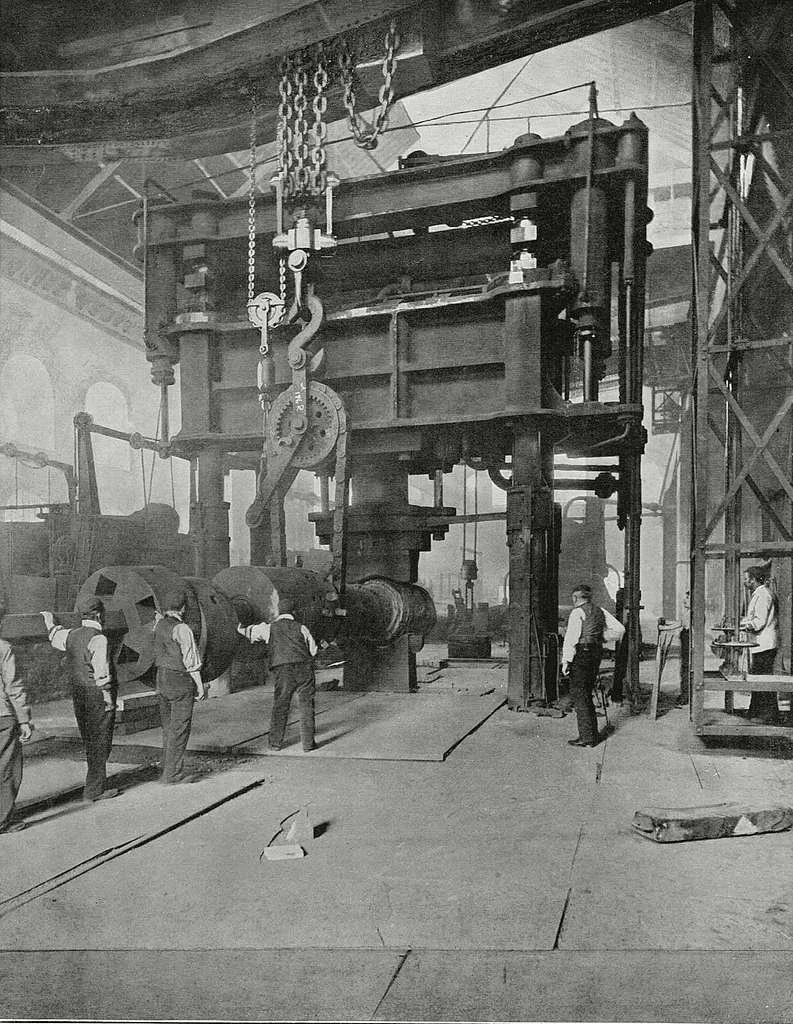
Steel production. Precious few sites across the UK can provide the virgin steel required for major industries, with the former Liberty Steel site at Sheffield remaining mothballed despite recently coming into public ownership. If we’re serious about reindustrialisation, then where was its place in the budget? It was only six months ago that a previous Cabinet Minister committed to further import tariffs, yet we remain silent on the basis and future of our own production. Why?
Reducing our reliance on imports of critical supplies. Some of our recent discussions with manufacturers revealed a worrying dependency on certain imported metals and chemicals for finished goods; similarly, our trade gap between what we export and what we continue to import remains very high. Little was given over to it in the budget. Why?
Our continued incoherent energy policy. We could be here all day on this….but at some point our huge overreliance on imported LNG from Norway and beyond will need to retreat into British-sourced power that supports growing electrification, an absolutely necessary route to support decarbonisation and reduce energy costs. The budget dropped hints: that the reformation of the electricity market will be set out in a new 10-Year Plan, with the Chancellor suggesting decisions on key elements of its Reformed National Pricing policy programme, including how siting and investment decisions are made by generators, constraint management, system pricing, and balancing and settlement arrangements. Again however, it was more a nod and a wink than something concrete.
This approach does not augur well. The baton needs to be picked up PDQ.
Getting on with it - and speaking up when it is and isn’t working
The reality is that we’ll get on with our work regardless - but we will be speaking up at all levels of Government to plainly explain what is and isn’t working as a result of the decisions made in this budget or those avoided.
As ever, get in touch to work with us to make the UK more economically competitive.